Many of us have heard of Alpha heatsinks, as they have been at the top of the heatsink market for many years. Alpha makes the heatsinks (only) and then sells these OEM products to stores to put their own fans on. During the past few years whenever a new heatsink was introduced it was compared to Alpha's heatsinks which were considered the best heatsinks there was. As such they cost more than most other heatsinks, but many were willing to pay the extra price to get a heatsink that would allow them to overclock just that little bit more than with other heatsinks.
Alpha had managed to create a heatsink that lasted about two years and worked with three different types of CPU, this was the PAL-6035 which worked with socket 370, socket 7, and socket A even though it was made before this socket was released/made. It's main design plus was the copper insert that actually made contact with the processor and, as we all know copper is a better heat conductor than aluminum, while aluminum releases its heat much quicker.
Many companies have tried to copy this recently, one such example being ThermalTake with the Volcano 6CU series and also the Dragon Orb series, both of which have a copper core/insert with aluminum fins. As companies were finally catching up with a design made a couple of years ago, Alpha had to come up with something new if it wanted to be considered the best heatsink for the Socket A overclocking platform.
So what did they do, did they go completely copper, like some of their competitors? Or did they stick with their copper/aluminum hybrid design? Read on to find out.
The Alpha PAL-8045T Specs
As the model number indicates this heatsink is like a big brother to the PAL-6035 series and still uses a copper/aluminum hybrid design. But what changes have been made to this heatsink since the 6035? Here are the specs (taken from Alpha's website).
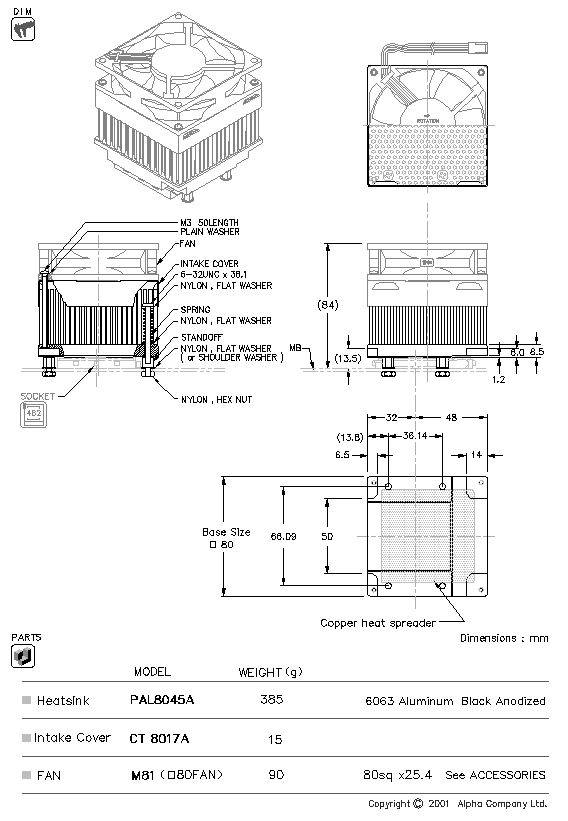
To look a little more into the technical details of this heatsink check out . Well we've seen the technical details of this heatsink, but what does it look like in real life?
The Alpha PAL-8045T Heatsink
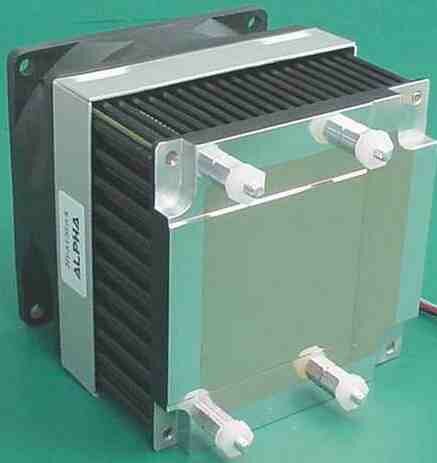
The major changes have to do with sheer size, the 8045 is 10mm taller than its little brother and is also 20mm wider. As it is bigger it thus will weigh more, so it uses the four holes around the CPU socket. This helps to not put any strain on the socket slugs, and also is useful as the heatsink is too big to use the slugs. We will talk about the mounting differences a little later on. There is also a shroud for this heatsink, to direct the air from the fan onto the aluminum pins. There are definitely many pins, used instead of fins, for transferring the heat from the copper/aluminum base to the surrounding air, but I didn't count how many there are.
What about the clipping/mounting mechanism, is it any different than any other heatsink? Well for a start the four holes around the socket are finally used, as only one other heatsink company uses this method, Swiftech. For mounting instructions I'd suggest you look at (pdf).
The pros about this way of mounting is that it doesn't damage the slugs around the socket, and as such it will not rip off as you are transporting your case around. It also allows for equal pressure to be placed on the CPU die itself, and it is easier to put on or take off (assuming you have the motherboard out). The major downside to this mounting mechanism is that your motherboard has to be taken out of the case before you can take the heatsink off. Another downside is that not all socket A motherboards make sure that there is enough space around the socket for the heatsink to fit, and/or the socket holes are not present. In fact Alpha has a list of many .
Well we have looked at the heatsink, and since we know that Alpha sells their heatsinks to companies without fans, what fans did we use for this heatsink?
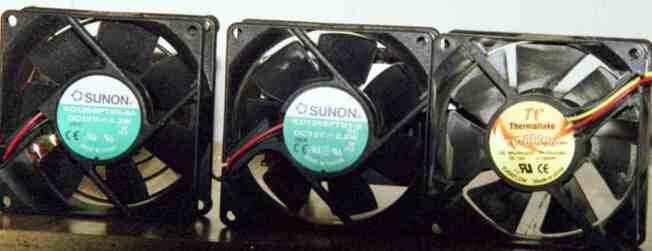
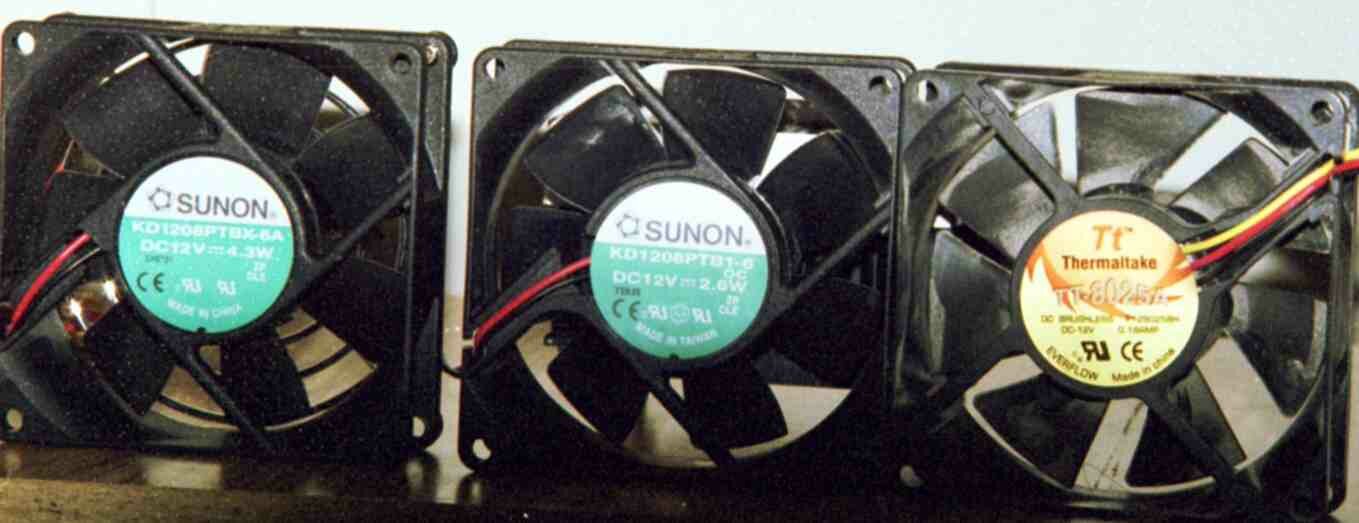
From the left to right we see a Sunon 50CFM Fan rated at 40.5dBA @ 3900RPM (Part #KDE1208PTBX-6A); next is another Sunon fan this one produces 43CFM and is rated at 37dBA @ 3200RPM (Part #KD1208PTB1-6); and lastly, to break the monotony of Sunon fans we have a Thermaltake 37CFM Fan rated at 30dBA @ 2900RPM. While none of these are the 68CFM or 80CFM Delta's, they are fans that aren't so loud that your ear drums will blow after listening to them for a couple of hours, yet they still move a good amount of air.
We've talked about the heatsink and the fans it will be tested with, now lets look at the test system.
Test System Setup
All testing was done on the following three processor speeds:
| CPU: |
AMD Athlon 1GHz @ 1.75v - 51.4 Watts |
AMD Athlon 1.2GHz @ 1.94v - 75.8 Watts |
| Motherboard: |
Abit KT7-RAID BIOS 64
|
| Memory: |
256MB PC-133 @ 2-2-2 |
| Hard Drives: |
20GB Quantum LM, 40GB Maxtor
|
| Sound Card: |
Sound Blaster X-Gamer 5.1 |
| Operating System: |
Windows 2000 Professional Service Pack 2 |
| Front Side Bus |
100MHz (200MHz DDR) |
| Video Cards: |
Hercules Prophet 4500 (Kyro II) |
| Coolers: |
Thermal Take Dragon Orb 3 (7000RPM); Global Win FOP-38 (7000RPM); Global Win CAK-II 38 (7500RPM); Global Win CAK-II "32" (5500RPM); Alpha PAL-8045T - 37CFM TT, 43CFM Sunon, 50CFM Sunon |
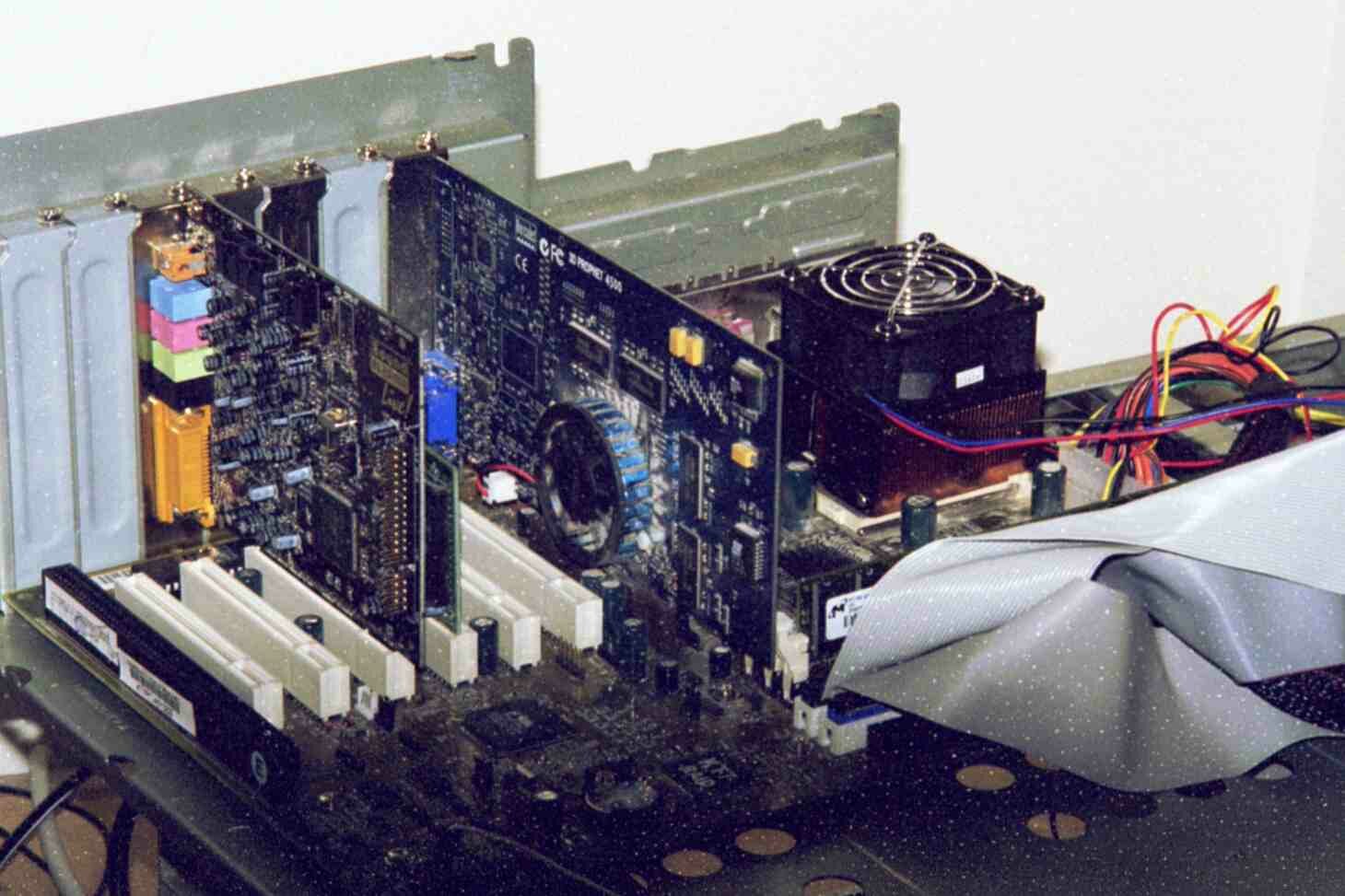
The Test system looked like this:
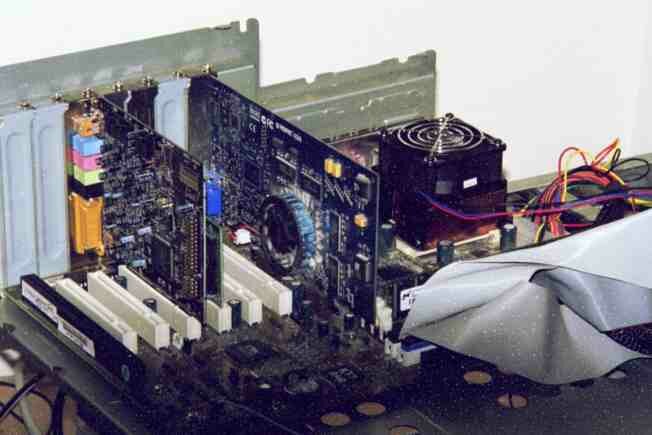
The tests were run directly after bootup, and then the processor was allowed to cool for approximately 15 minutes. Sisoft Sandra 2002's burn in test was used with 23 repetitions of CPU Arithmetic and Multi-Media benchmarks being run. Two tests were done for each speed, as follows, 1GHz then 1.2GHz then 1GHz and lastly 1.2GHz. If the temperatures were off more than a degree between both tests a third test was run and the two closest temperatures were used.
The Athlons used the socket thermometer to read the temperatures and the monitoring software used was MBM 5.1.0.2. Room temperature was measured using a Radio Shack Indoor/Outdoor Thermometer with Dual Display and was never more than 0.2°C off stated room temperatures.
Sound levels were measured using a Radio Shack Digital Sound Level Meter from 1 meter away from the heatsink/fan. The only other fan running at that time was the Enermax power supply fan.
The Test Results
The first test was carried out on an non-overclocked Athlon 1GHz B series, with a core voltage of 1.75 volts, producing 51.4 watts of heat.
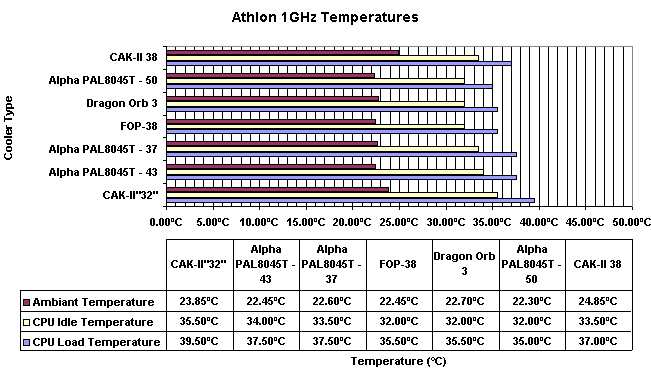
What do these test results show? We see that the heatsinks with high volume/speed fans perform within about 1°C of each other. When a slower fan is added the Alpha is only 2°C behind the high speed fans, and is about 1°C ahead of the CAK-II '32'. All temperatures are within 4°C and as such there isn't much to differentiate between heatsinks, as they all perform very nicely with a standard Athlon 1GHz.
Does this graph change when we add 25% more heat? Lets see with a look at the Athlon 1.2GHz running with a core voltage of 1.94 volts, and producing 75.8 watts.
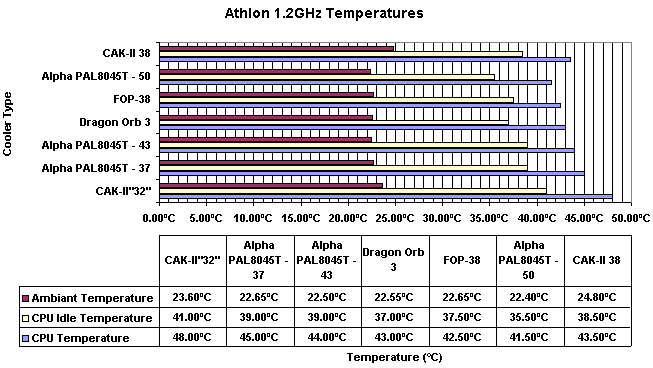
This test helps to separate the great performers with the 'good' coolers. Here the CAK-II loves the high speed of the black label Delta fan that is 2000RPM or 34% faster than the slowest 60mm fan tested. The Alpha is only 700RPM or 21% faster than the slowest 80mm fan in this test. Even though it is slower, speed wise, with the 50CFM fan the PAL is only part of a degree off of the best temperature produced by the CAK-II, which is well within the error range of the test.
The other Alpha fans perform much better than the CAK-II '32' by about 3-4°C because of the volume of air that they move. The slower fans perform nicely, but not as good as the other heatsinks with fans giving higher RPM's but similar CFM's as these 43CFM/37CFM fans.
Sound Levels
What about the sound levels
| |
FOP-38 (Delta 7330 RPM) |
Dragon Orb 3 (7031 RPM) |
CAK-II 38 (Delta 7500 RPM) |
CAK-II "32" (5532 RPM) |
Alpha 8045T (TT 3409 RPM) |
Alpha 8045T (Sunon 3200 RPM) |
Alpha 8045T (Sunon 3900 RPM) |
|
Sound Level (dB):
|
58 |
59 |
59 |
51 |
51 |
50 |
57
|
The sound levels are fairly similar with temperatures, as the lower sound levels are the weaker performing heatsinks. The Alpha with the 3900 RPM Sunon fan is quieter (slightly) than the other high RPM fans, yet the fan sound is more of a whooshing than the incessant whine of the Delta Black label fans.
Conclusion
What though can we conclude about this massive heatsink? We can see that this heatsink performs very well, tying the best heatsink so far, the CAK-II 38 from Global Win. It seems that this heatsink keeps up Alpha's tradition of creating the best heatsink for the rest to try to copy/beat performance wise.
To what does it owe this performance? Most of the performance can be traced to the heatsink size itself, as it offers a basic surface area about 77% larger than many 60mm heatsinks. The fan volume of the slower fans is very quiet, but not silent, though with the quieter fan it could very well cool an XP 2000+ without overheating. The copper inlay also helps performance, compared to an aluminum only heatsink.
The mounting of the heatsink is both a good and bad thing. The mounting using the holes around the socket, allow for a better and sturdier mount, putting less pressure on the CPU core, thus lowering the possibility of cracking the core and giving yourself an expensive keychain. The poor points of this mounting design is that you have to take the board out to put the heatsink on or take the heatsink off, which is only annoying if you are upgrading CPU's fairly regularly.
Aesthetically, the heatsink looks average, with the shroud giving it a little more 'class'. The basic design is very professional and clean with the base being very polished and free of any thermal pad. The height of the heatsink with the fan installed can stop you from being able to take the slide out motherboard tray out of a Inwin Q500, but unlike the Dragon Orb 3 which has the same problem, the fan can easily be taken off and put back on.
The absence of any fan on top of the heatsink has both pros and cons. The lack of fan allows for you to add any speed fan, from the slow Antec Stealth Fan to the screaming loud 68-80CFM Delta fans. The problem with this is that you have to pay extra for the fan, above and beyond the cost of the heatsink.
The only other low point is the price, this heatsink isn't cheap at about $35+ US for the heatsink only. The price with a fan would be about $50 before shipping, which approximately $15 more than the CAK-II, while performing the same in these tests. The PAL-8045 though, has plenty of fan headroom as the fastest fan testedhas 30CFM less airflow than the fastest fan of its class, while the CAK-II is already the fastest fan in its class.
Good Points
- Very good Performance even with quiet fans
- Quiet fans
- Stable mounting design
- Uses 80mm fans
Bad Points
- High price
- No Fan as standard
- Installation is slightly harder