|
Image Quality
 
All the Anti-Aliasing shots were done without anisotropic filtering, which we will get into later on.
 
 
Anti-Aliasing image quality is comparible at 2x, though at 4x, ATi's AA is a little smoother, though nothing you'd probably notice while ducking rockets.

ATi one ups nVidia by offering 6xAA, which quite simply looks incredible. An older game engine, such as Quake 3, is fully playable with 6xAA up to 10x8. 12x10 gaming was also playable, though more in the case of single player than multiplayer.


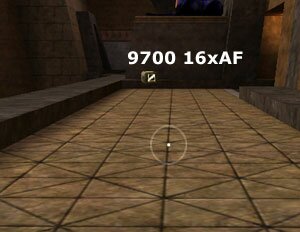
Although it's tough to see in these screenshots, Anisotropic filtering is relatively equal for both cards. The difference, other than ATi offering 16xAF, is the speed. Both cards take a performance hit, though the Radeon suffered less of a hit percentage-wise, than the Ti4600.

nVidia used to be knocked for their image quality, but it has improved a lot over the past few years. ATi, thankfully, didn't sacrifice their image quality, and the big draw, other than raw speed, is their speed with things such as AA and AF turned up. Playing UT2003 at 1280x1024 with 4xAA and 16xAF is quite remarkable.
Previous Page - Anti-Aliasing & Overclocking Results
Next Page - Final Words
|


