Overclocking
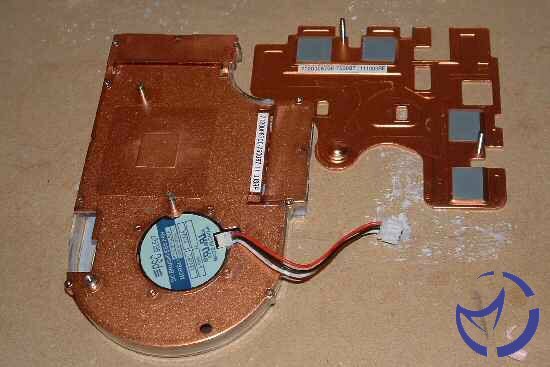
Most video cards have at least a certain amount of overclock that they can do. To get the best out of an overclock you need good cooling, and the previous Radeon 9800 didn't have quite the cooling as the XT looks to have. So lets take a quick look at the cooling of this video card.
If we take a look at the heatsink connection we see that ATI has decided to use thermal paste for the GPU instead of a thermal pad. This shows a little extra attention to detail, though the ram still used thermal pads. The heatsink is connected by four screws, with the two nearest the GPU being held down by a clip to keep the front and back portion of the heatsink tight. The rear heatsink is simply a thin sheet with just a larger flat surface area. The GPU itself is a R360 or the Radeon 9800XT, while the RAM is made by Hynix and has a rated speed of 400/800MHz. But how loud is the fan in this case? Lets take a quick look.
|
Video Card
|
MSI FX5900U - VTD (Front Fan) |
MSI FX5900U - VTD (Both Fans) |
Matrox Parhelia |
ATI Radeon 9800XT |
ATI Radeon AiW 9000 Pro |
|
Sound Level (dBA):
|
51/56 (L/H) |
55/63 (L/H) |
61 |
50/64 |
54 |
Just like the MSI video card, the ATI Radeon 9800XT seems to have a temperature controlled fan, as upon initial startup it spun at close to 65dBA, though once it realized there was no load dropped to about 50dBA (or less). This sound level is very commendable as quietness is something strived for by many users today, but did this sound level have any effect on the overclocking of the card.

We can see that the cooling and hardware allow us to reach an extra 50MHz for the core and only 20MHz for the memory. For the core speed, the improvement speed wise is about 10%, while for the memory it is only 5%, which isn't even near the actual memory speed of 400MHz. Of course your results may vary, and hopefully for the better, but in our benchmarks we will look at how much of a performance increase the clock speed increase offers.
2D & TV-Out Quality
We all know that the quality of the image that we look at on the screen is one of prime importance, as we are looking at the 2D portion of the screen all the time. From our testing we have found that there are some bad looking video cards out there, and then there are the rare ones that give exceptional 2D quality. ATI seems to be one that is more the later than the former as they consistently give very nice image quality. So how does this latest release fair in this test?
| |
G400 |
Parhelia (H1/H2) |
ATI Radeon 9800XT (H1/H2) |
MSI GF4MX (H1/H2) |
MSI GF4 (H1/H2) |
MSI GF4 (H2) |
Radeon 8500LE |
MSI FX5900U (H1/H2) |
AiW 9000 Pro |
| Black Text: |
5 |
7.5/7.5 |
7/7.25 |
5/5 |
4/3 |
3 |
4.5 |
6/6 |
7 |
| White Text: |
5 |
8/8 |
7.25/7.25 |
6/6 |
3/1 |
1 |
3.5 |
7/7 |
7.5 |
| Bitmap Test: |
5 |
9/9 |
8.5/8.5 |
4.5/5 |
4/4 |
4 |
5 |
7.5/7 |
7 |
| Overall RATIng: |
5 |
8.25/8.25 |
7.5/7.75 |
5.25/5.5 |
3.75/3 |
3 |
4.25 |
6.75/6.5 |
7.25 |
We can see that ATI has made another very good card with the overall quality being very close to that of the Matrox Parhelia. The only major differences between the two cards is the ATI card was slightly darker in the black on white text test and also on the image test. But otherwise the text was very clear and usable, and the images were very nice as well. You will not have any problems using this card for everyday use without problems.
TV-Out has become a very common addition to video cards these days. With the advent of high quality TV's, the quality of this feature of video cards has become very important. So lets look at the quality of the ATI card in comparison to other cards.

Reference Image
|

Matrox G400
|

Matrox Parhelia
|

MSI GF4 MX 440
|

MSI GF4 Ti4800
|

MSI GF FX5900 Ultra
|

Hercules 8500LE
|

ATI AiW 9000Pro
|

ATI Radeon 9800XT
|
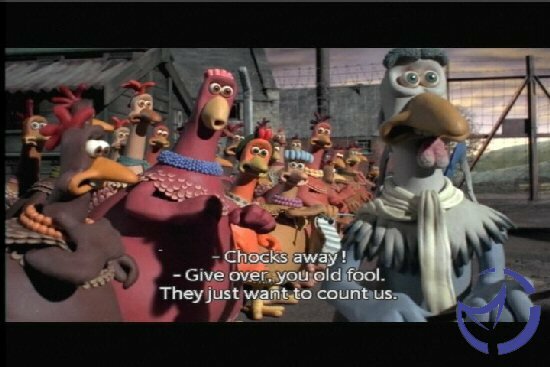
The Radeon 9800XT has a better image than the Radeon 9000 Pro, but this isn't saying too much. The text for the 9800XT is sharper and has very little of the checkered pattern that the AiW 9000Pro had. For the rest of the image it is blurry but is smoother than that of the AiW 9000Pro. The TV out of the FX5900 Ultra suffers from a distorted image, that has a border on either side of the picture, and a fuzzy picture. There also seems to be a pronounced checker pattern on solid colors and also on the text, something we don't see with some of the other cards notably the Parhelia. While the text on the reference image is sharp and aliased, the Parhelia does a good job of antialiasing the text, while not overdoing it. The AiW 9000 and 8500LE cards do fairly bad with the text, as it is very blurry, with the AiW 9000 having a slightly worse text image here. The image itself is nothing great with the ATI cards as there is the blurring again with the eyebrow, as well as some of the wire fence missing with the images from the AiW 9000 especially, but also with the 8500LE and the Ti4600-8X. The TV-Out is slightly better than the AiW 9000Pro but still needs some work before it is considered to be among the best in its class.
NEXT
|